Working Together for Net Zero: A Business Guide to Industrial Symbiosis
When margins are tight, waste is a luxury. Industrial symbiosis helps UK businesses turn under-used resources into local savings. Sustainability is not only about new technology; it is also about using what we already have better, for example sharing heat, materials, storage, logistics, and skills. With energy and material costs biting and the UK’s legally binding net zero target for 2050 in place, companies, especially small and medium sized ones (SMEs), need practical ways to cut expenditures and emissions while building local resilience.
Many businesses already work on efficiency, yet opportunities are often missed because “waste” is viewed too narrowly. Reframing under-used resources as valuable inputs for nearby organisations unlocks quick wins. This business guide distils the essentials so busy teams can spot opportunities quickly and move from idea to pilot with confidence.
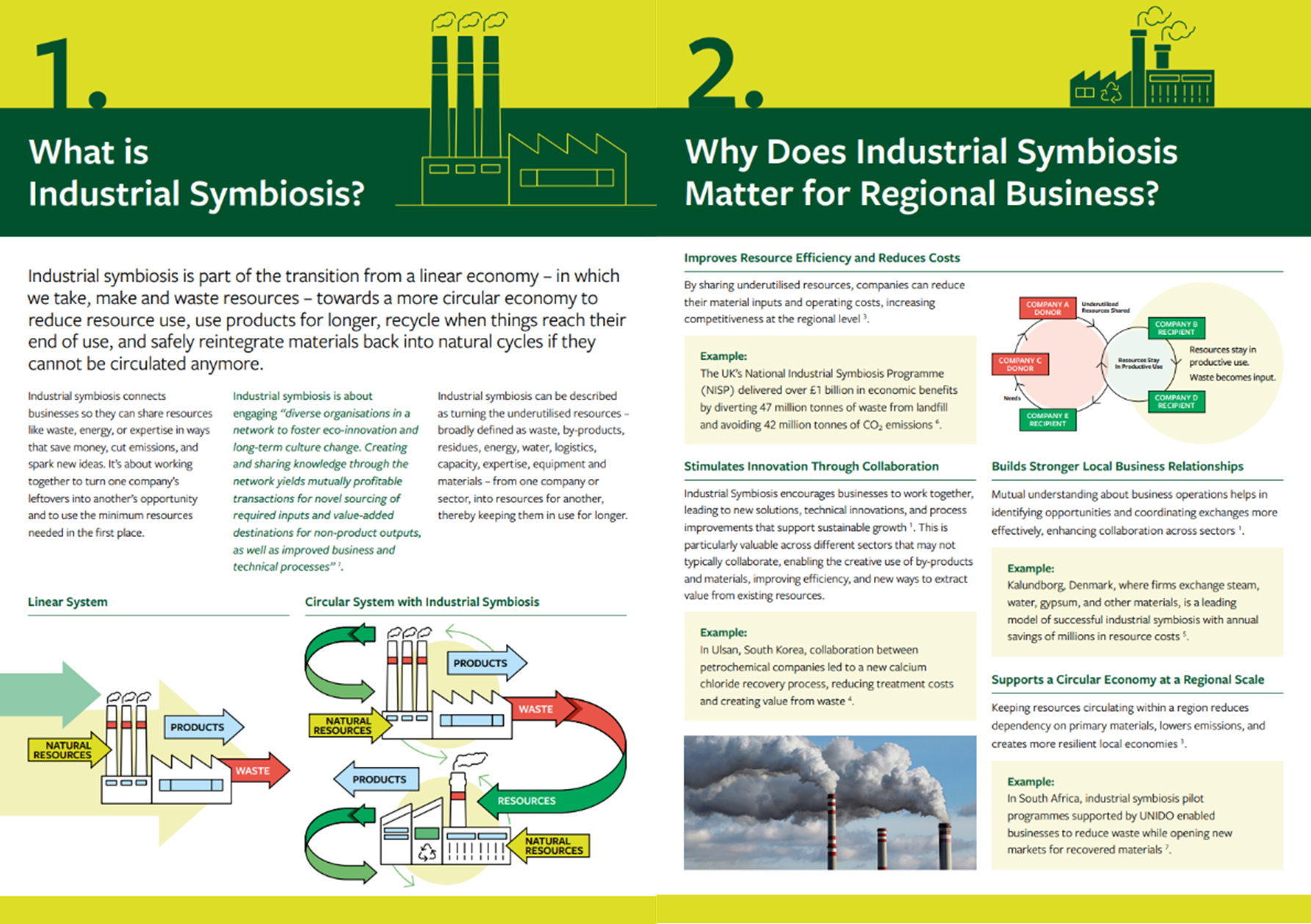
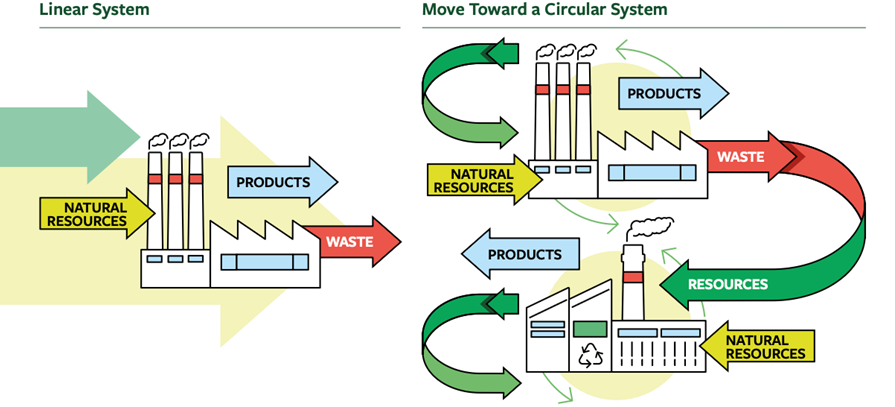
Industrial symbiosis connects companies so that one organisation’s under-used resources become another’s inputs. It is about practical exchanges of materials, energy, water, space, and logistics that reduce costs, lower emissions, and strengthen business networks. Done well, it keeps value circulating in the region, shortens supply chains, and supports the UK’s shift to a more circular and competitive economy.
The manual offers four steps, plus a short guide to what usually matters:
- Step 1: Identify and assess a potential synergy.
- Step 2: Build the business case and agreements.
- Step 3: Implement the exchange.
- Step 4: Monitor, refine, and scale.
The business guide highlights key factors such as technical compatibility (quality, timing, storage, transport), legal and regulatory clarity (definitions, permits, contracts), and economics (cost–benefit, funding, return on investment). It flags common pitfalls to avoid, such as waiting for a perfect match before starting, ignoring clarity on what counts as waste, and trying to do everything alone.
Organisations can use the guide to review their sites with fresh eyes, initiate conversations with companies nearby and in your supply chain, and engage a facilitator to reduce risk. It is designed for quick wins and steady scaling, offering checklists for small and medium sized companies, a shared language for partners and councils, and a practical route to measurable savings and regional impact. Starting small is recommended, as even a single exchange can deliver savings in the short term and catalyse wider collaborations toward net zero.
Read and download the industrial symbiosis manual (link opens in new tab) in full.