
The RESCUE project calls for Government action to enable a circular economy for wind energy infrastructure
Ambitious plans to grow wind capacity in the UK will require millions of tonnes of materials, with demand stretching far beyond domestic capacity for material processing and wind turbine manufacturing. This puts climate targets and fossil fuel independence at risk. With the first generation of wind farms reaching their end-of-use, now is the ideal time to build a circular economy for the UK’s wind industry. Government action is necessary to set a clear vision for the market, build capacity within government bodies and in wind supply chains, and offer guidance to navigate a complex governance landscape.
A series of five policy briefings has been published through the Innovate UK funded RESCUE project. RESCUE is short for Regulations to Ensure Sustainable Circular Use at End-of-life. The project was led by ORE Catapult, in partnership with the Universities of Leeds, West of England and Birmingham, with industry partners EMR and Ionic Technologies, and subcontractor Green Alliance.
RESCUE established a network exploring regulatory drivers and barriers impacting on innovation in circular supply chains for the wind industry in the UK. The project’s discovery phase (2024) identified and prioritised regulatory issues, followed by the implementation phase (2025-26) to collaboratively resolve regulatory challenges.
Research and engagement focused on resources, waste and planning regulation, navigating the regulatory landscape, industrial standards, and capacity building. We are extremely grateful to the ca. 270 stakeholders from over a hundred organisations who were involved in the implementation phase, informing a series of policy briefings.
 Building a Competitive, Circular UK Wind Industry
Written by Green Alliance and launched to all parliaments across the UK, this brief summarised RESCUE’s key policy recommendations:
- Ensure coherent governance
- Set a strong long-term vision and ambition for circularity
- Strengthen existing regulation and create guidance in the short-term
Read the full briefing: How to build a competitive, circular UK wind industry » Green Alliance
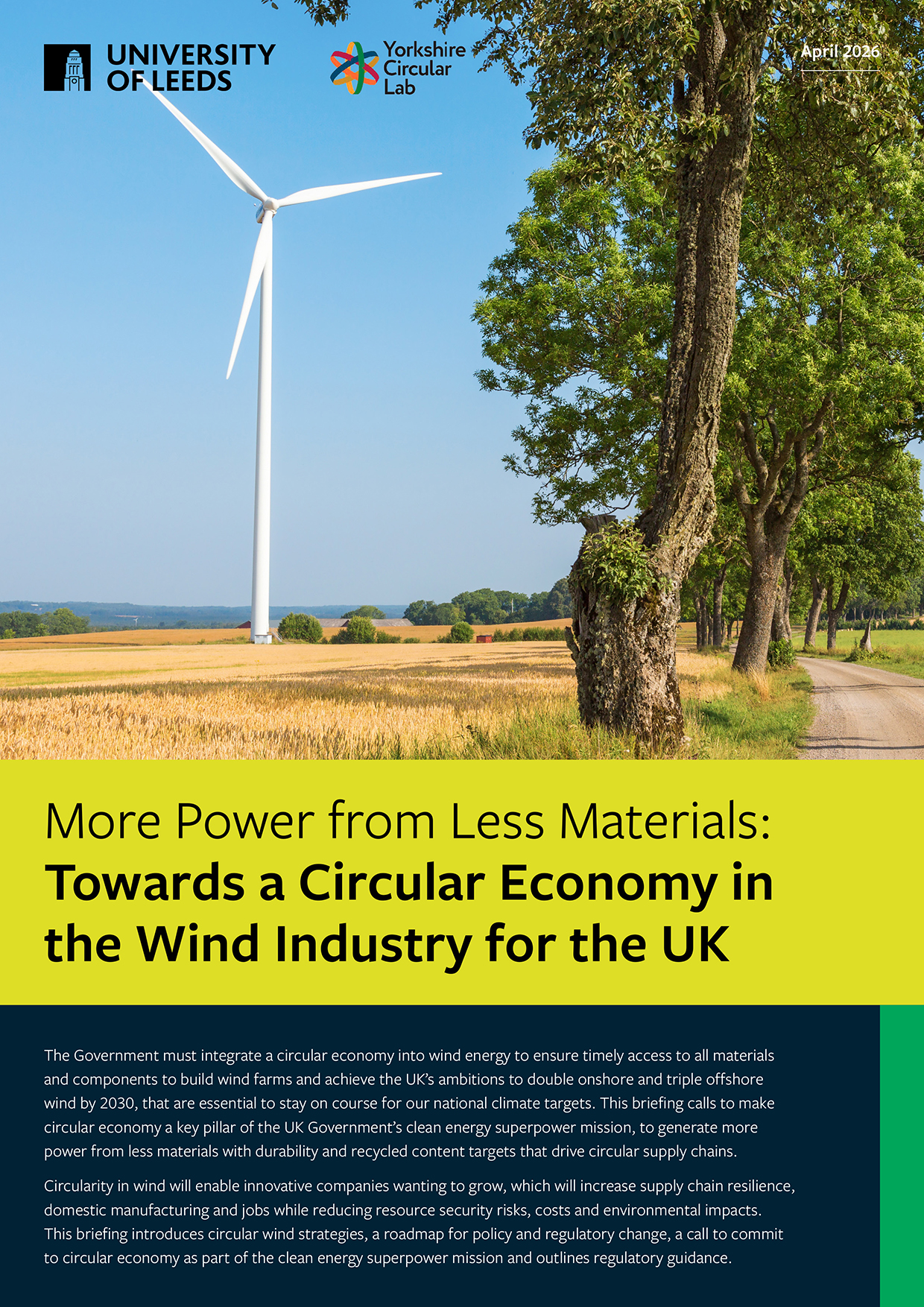 A Roadmap, Vision and Guideline
This briefing calls to make circular economy a key pillar of the UK Government’s clean energy superpower mission, to generate more power from less materials with durability and recycled content targets that drive circular supply chains.
Circularity in wind will enable innovative companies wanting to grow, which will increase supply chain resilience, domestic manufacturing and jobs while reducing resource security risks, costs and environmental impacts.
Building on broad consensus among the RESCUE project stakeholders, this briefing presents:
- Roadmap to embed a circular economy for onshore wind through policy and regulatory change
- Vision to generate more power from less materials
- Guideline to support navigation of the regulatory landscape by industry and government bodies
Read the full briefing: Towards a Circular Economy in the Wind Industry for the UK >> YCL Circular Wind
 Resilient Circular UK Wind Supply Chains
The UK plans major expansion of wind energy capacity but faces material supply risks and emerging decommissioning needs. A circular economy approach can boost resilience, jobs and emissions reductions, but progress is hindered by fragmented regulation and business support. This briefing calls for:
- Streamlined integrated governance
- Improved data sharing along wind turbine lifecycles
- Coordinated business support for circular wind supply chains
Read the full briefing: Enhancing Resilience and Circular Economy in UK Wind Supply Chains >> YCL Circular Wind
Two further briefings aim to offer solutions for two particularly thorny regulatory challenges, namely the lack of end-of-use planning conditions and the multitude of waste codes in use for wind turbine blades.
 Planning Conditions for End-of-Use of Onshore Wind Farms
With relatively limited experience in end-of-use management of wind farms, and a complex governance landscape to navigate, wind operators and companies often lean on planning conditions that were agreed decades ago, treating such conditions as procedural obligations to follow exactly.
Current planning conditions for end-of-use generally do not align with policies and regulations to enable a more circular economy. As such, planning conditions for wind end-of-use are limiting circular economy practices. Therefore, this briefing aims to support planning teams with model end-of-use conditions for onshore wind, to turn planning from a barrier into a catalyst for circularity.
Read the full briefing: Recommended planning conditions for end-of-use management of onshore wind farms within a circular economy in the UK >> YCL Circular Wind
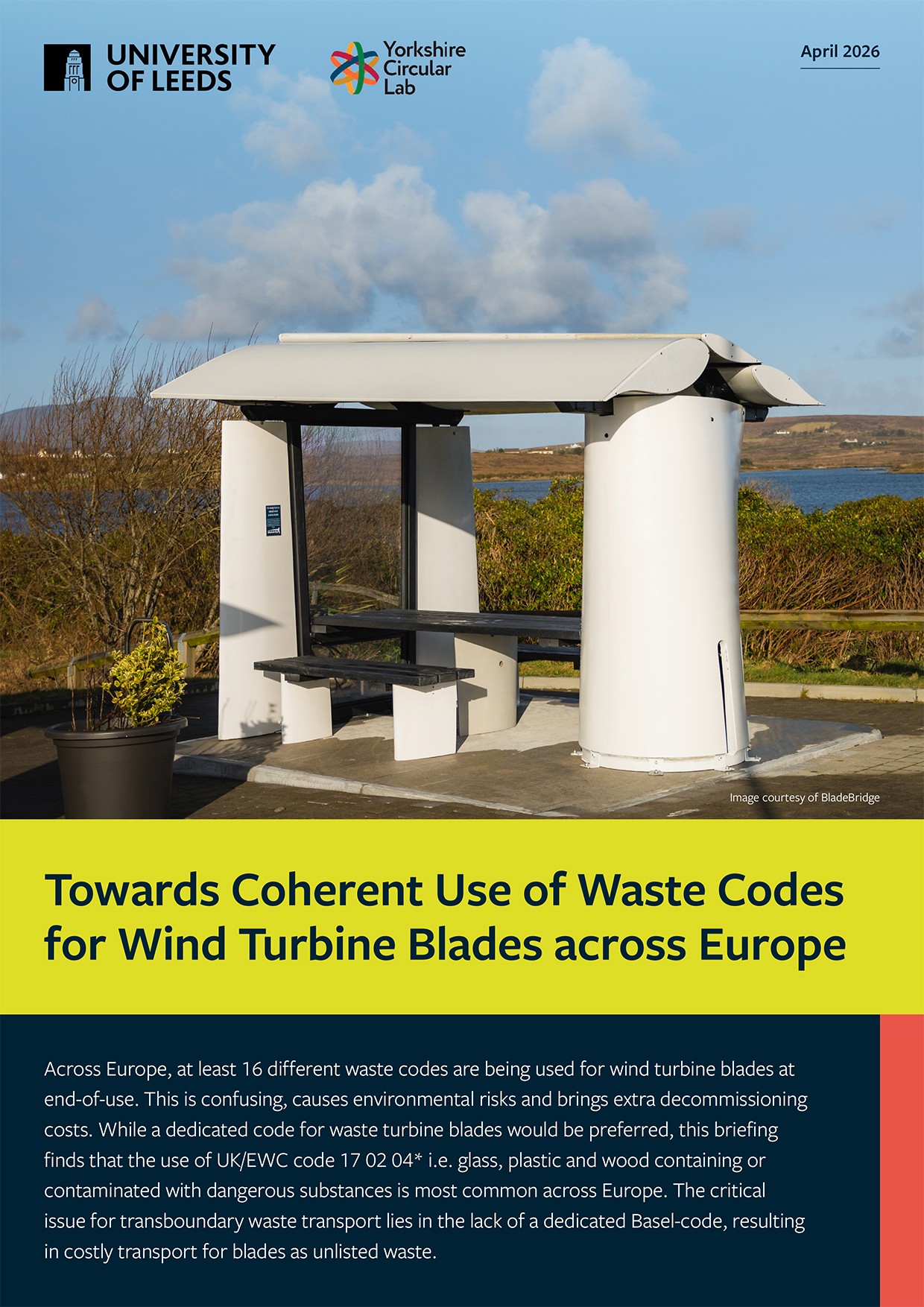 Coherent Use of Waste Codes for Wind Turbine Blades
A growing volume of turbine blades is entering the waste stream. The wind industry has made a tremendous effort to successfully resolve blade end-of-use challenges. But technical solutions are held back in practice by regulatory issues. One of the most discussed is the high diversity of waste codes being used.
This briefing found that at least 16 different waste codes are being used for wind turbine blades at end-of-use across Europe This is confusing, causes environmental risks and brings extra decommissioning costs. While a dedicated code for waste turbine blades would be preferred, this briefing finds that the use of UK/EWC code 17 02 04* i.e. glass, plastic and wood containing or contaminated with dangerous substances is most common across Europe.
Read the full briefing: Towards Coherent Use of Waste Codes for Wind Turbine Blades across Europe >> YCL Circular Wind
Contact
For any comments or requests for further information, please contact Dr Anne Velenturf at [email protected].